Key Takeaways:
- Chatbots follow scripts; AI agents make decisions based on context, intent, and real-time data.
- AI agents automate 60–70% of routine work while autonomously escalating complex tasks to the right human.
- Enterprises see 35–45% higher conversion rates after switching from chatbots to agentic AI.
- Response times drop from hours to minutes, reducing lead drop-off by up to 50%.
- AI agents provide campaign attribution, journey analytics, and lead scoring—turning engagement data into revenue insights.
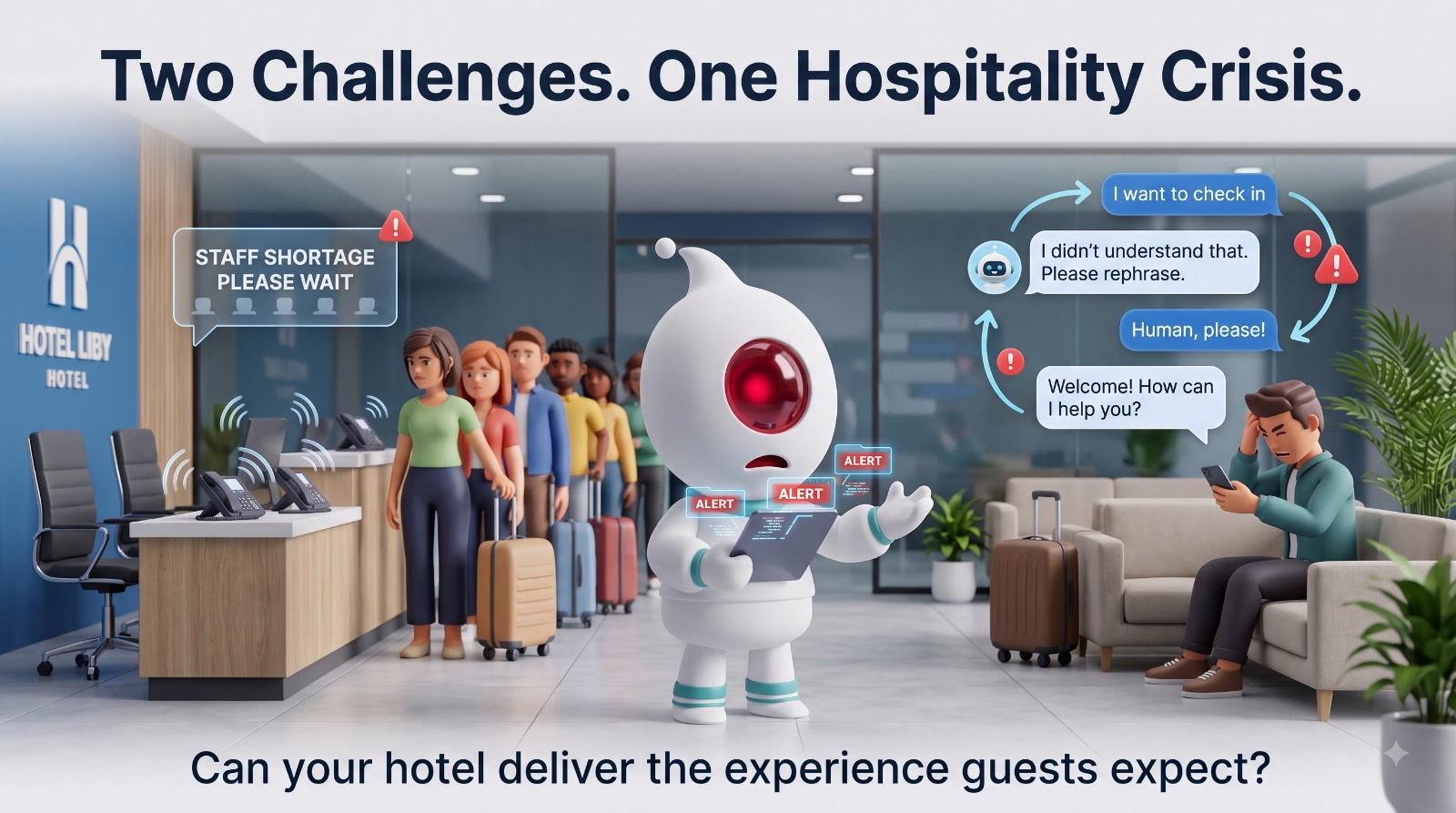
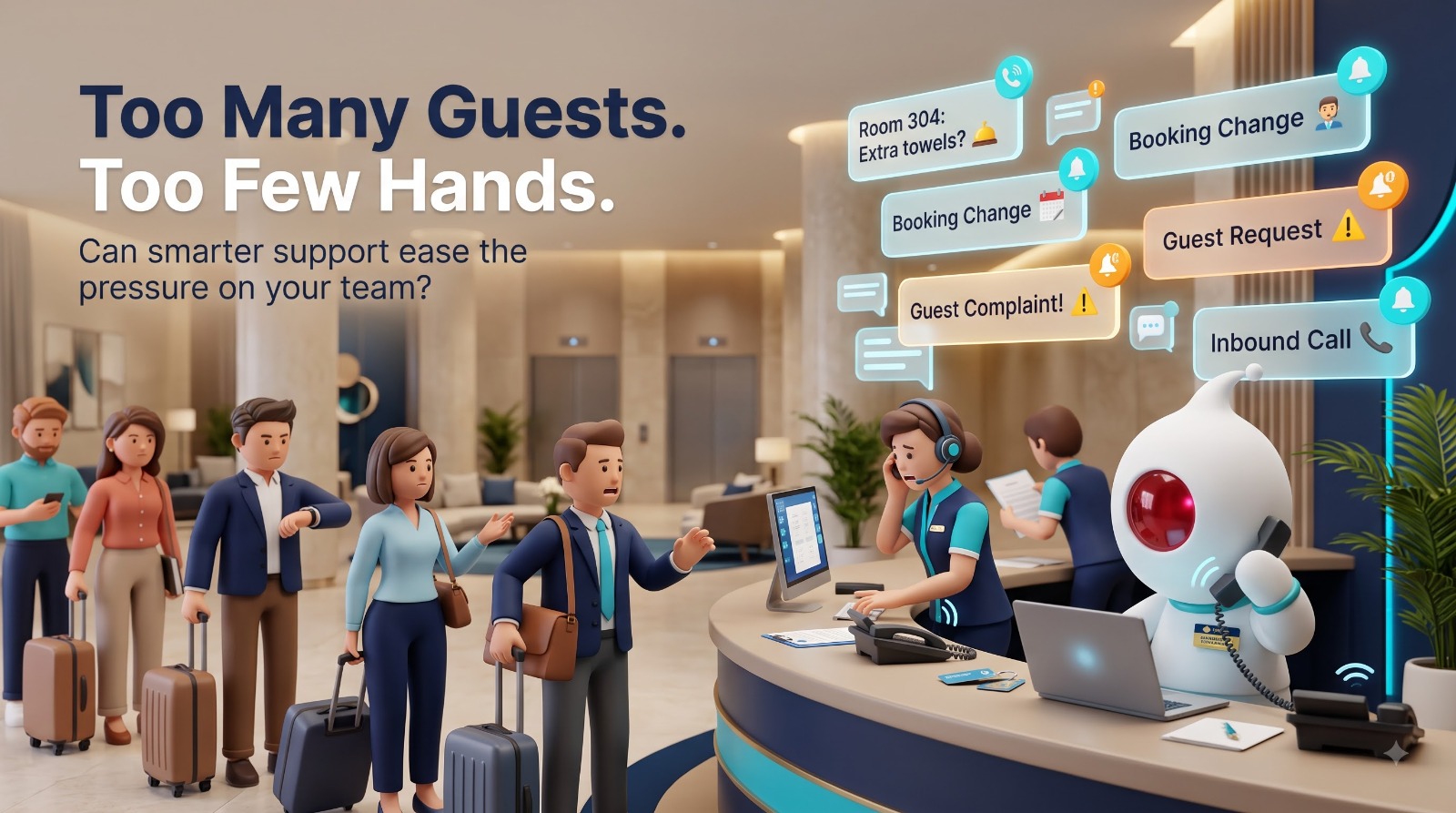
This isn’t a hypothetical. It’s the daily reality for thousands of enterprises still relying on rule-based chatbots that can’t understand context, can’t orchestrate multi-step tasks, and can’t escalate intelligently when things get complex.
The result? Lost bookings, frustrated customers, and teams still drowning in repetitive work despite “automation.”
AI agents are autonomous systems that don’t just respond, but act. They understand intent, orchestrate workflows across channels, escalate to humans with full context, and continuously optimize based on real-time data.
This is why enterprises across hospitality, retail, healthcare, and travel are making the switch. And this is why your competitors may already have.
Chatbots vs. AI Agents: The Fundamental Difference
Let’s be clear: chatbots and AI agents are not the same thing. Confusing them is like confusing a calculator with a data analyst. One follows instructions. The other figures out what needs to be done.
Traditional Chatbots: Reactive and Rule-Bound
Chatbots operate on if-then logic:
- If the customer asks about parking, then reply with parking details.
- If the customer asks about check-in time, then reply with check-in time.
- If the question doesn’t match a pre-defined rule, then say “I don’t understand” or hand it off to a human.
The limitations are obvious:
- No context awareness: The bot doesn’t know this customer messaged yesterday about a group booking.
- No multi-step orchestration: It can’t book a room, add parking, schedule a call, and send a confirmation in one flow.
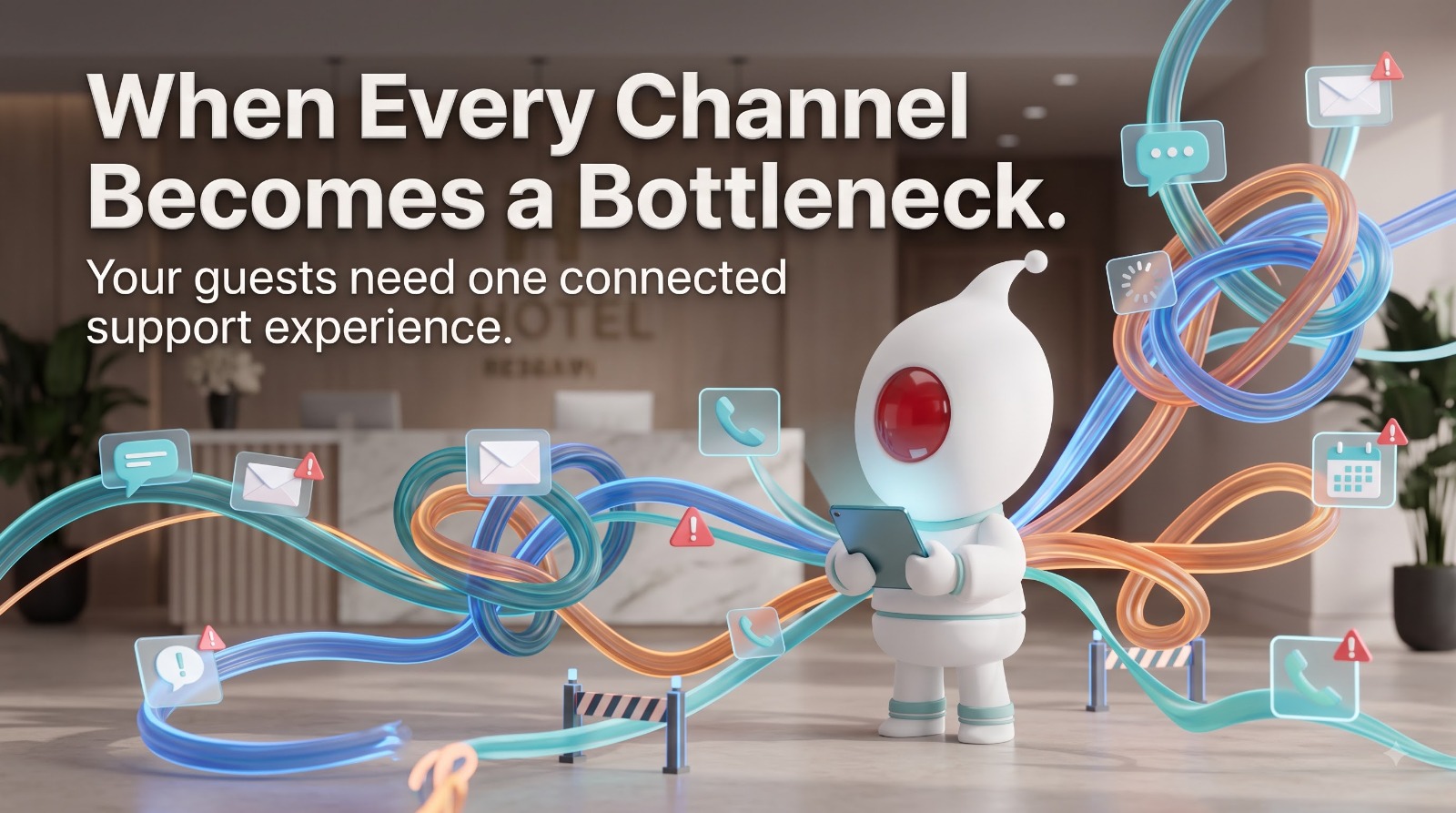
- No intelligent escalation: When stuck, it dumps the customer into a generic queue with no context transfer.
- No learning: It doesn’t get smarter based on what works and what doesn’t.
For business owners, this means chatbots automate maybe 20–30% of enquiries, the basic and simple ones. Everything else still requires human intervention, often with repetition and delays.
AI Agents: Autonomous and Outcome-Oriented
AI agents, by contrast, are built to achieve outcomes, not just answer questions. They:
- Understand intent and context: “I need a 3-night stay with late check-out and airport transfer” is parsed as a multi-part booking request, not three separate questions.
- Orchestrate workflows: The agent checks availability, quotes pricing, adds services, schedules a confirmation call, and sends a booking link—all in one conversation.
- Escalate intelligently: When a query exceeds its capability (e.g., a complex corporate rate negotiation), it routes to the right human with full chat history and metadata.
- Learn and optimize: Using AI-driven insights, it identifies patterns (e.g., which leads drop off at which stage) and adjusts workflows accordingly.
For business owners, this means 60–70% of enquiries are fully automated, response times drop from hours to minutes, and conversion rates climb because high-intent leads never fall through the cracks.
The Business Impact: Four Ways AI Agents Outperform Chatbots
1. Conversion: From 1.8% to 2.6% and Beyond
A hospitality group in India recently switched from a rule-based chatbot to an AI agent. Before: 1.8% conversion on enquiries, with 40% of high-intent leads dropping off due to slow or incomplete responses. After: 2.6% conversion, with drop-off reduced to 18%.
Why? The AI agent could:
- Score leads based on hot/cold intent (group bookings scored higher than single-night enquiries).
- Trigger immediate follow-ups (WhatsApp message → call within 15 minutes for hot leads).
- Personalize nurturing based on behavior (customers who abandoned at the pricing stage got a targeted discount offer).
Result: 35% more bookings from the same enquiry volume, without adding staff.
2. Response Time: From 3 Hours to 12 Minutes
A UK-based travel operator was losing leads because quotes took 48 hours to prepare. Their chatbot could answer FAQs but couldn’t generate custom itineraries or coordinate with suppliers.
After deploying an AI agent:
- Quote turnaround dropped from 48 hours to 15 minutes.
- The agent auto-generated quotes based on customer preferences, checked supplier availability, and sent a booking link.
- Complex requests (multi-destination trips) were escalated to human agents with full context.
Result: Conversion on quotes increased from 12% to 19%, and revenue per lead rose by 28%.
3. Labor Efficiency: Freeing 65% of Staff Time
A South African healthcare network was spending 4–5 hours daily on routine patient enquiries: insurance acceptance, appointment availability, pre-visit instructions. Their chatbot handled maybe 25% of these before failing.
After switching to an AI agent:
- 68% of routine enquiries were fully automated (insurance verification, appointment scheduling, document collection).
- Staff time on repetitive questions dropped by 65%, allowing nurses and admin to focus on patient care.
- Patient no-show rates fell from 18% to 9% due to automated, personalized reminders.
Result: Same staff, 2x patient throughput, and 22% higher satisfaction scores.
4. Insights: From Blind Spots to Revenue Intelligence
Most chatbots give you basic metrics: number of conversations, common questions, maybe a satisfaction score. AI agents give you revenue intelligence:
- Campaign attribution: Which channels (WhatsApp, Facebook, web chat) drive the highest conversion?
- Customer journey analytics: Where are leads dropping off, and why?
- Lead scoring: Which enquiries are hot vs. cold, and how should they be nurtured?
- String query capabilities: “Show me all enquiries about cancellations in the last 30 days” returns actionable insights instantly.
For a CTO or operations leader, this means you can optimize campaigns based on data, not guesswork. You can see, for example, that leads who receive a follow-up call within 15 minutes of a WhatsApp enquiry convert at 2.5x the rate of those who only get an email. That insight lets you orchestrate your team’s workflow to prioritize high-intent leads—improving conversion without adding headcount.
Case Study: How a 50-Property Hotel Chain Replaced Their Chatbot and Recovered $120K/Month
Company: Mid-scale hotel chain with 50 properties across India and the Middle East
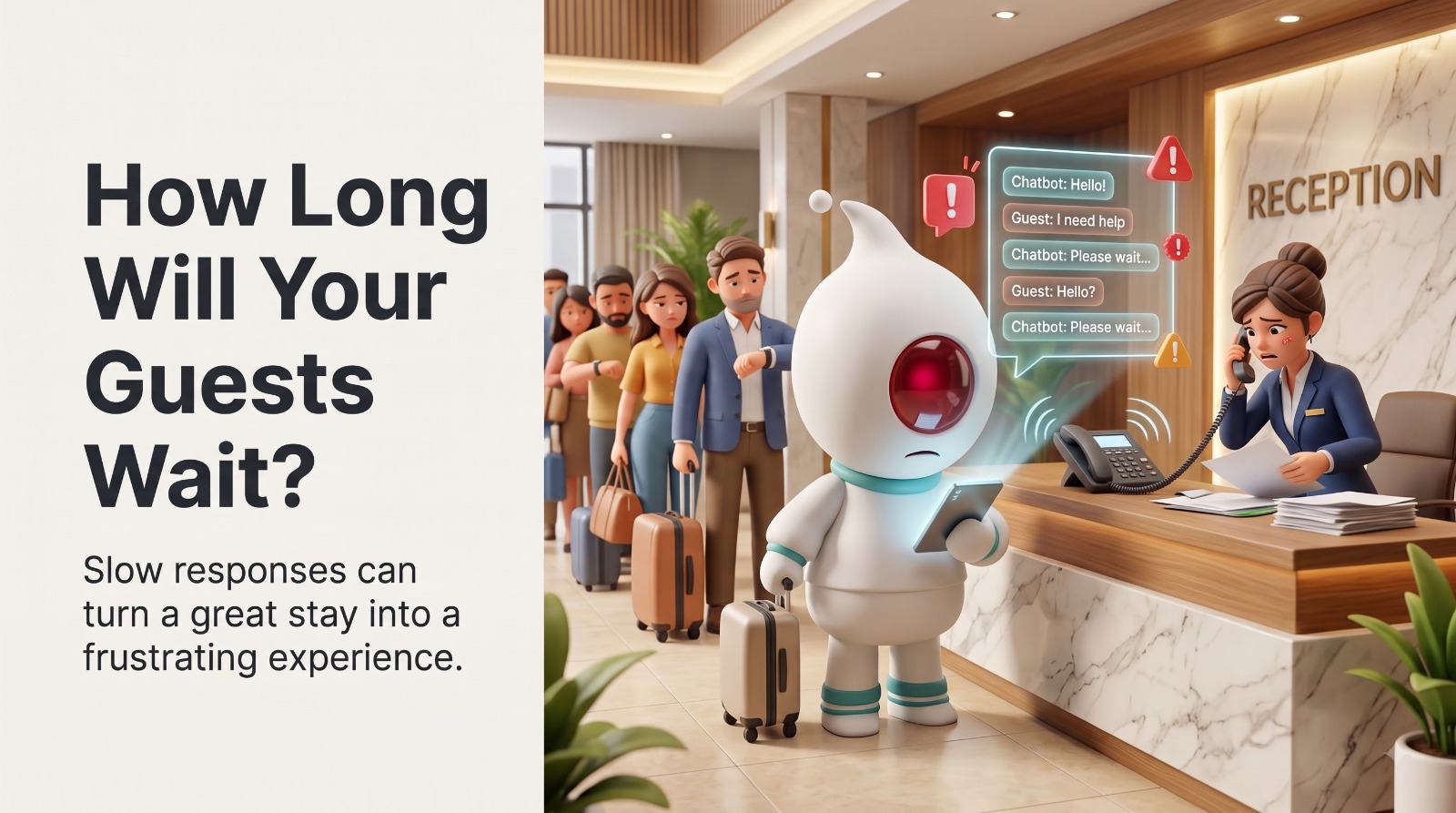
Challenge: Using a rule-based chatbot across 12 channels (WhatsApp, Facebook, Instagram, web chat, etc.). The bot answered ~30% of enquiries before failing. Complex queries (group bookings, corporate rates, special requests) took 24–48 hours to resolve. Estimated loss of 8–10 bookings per property per month.
The Breaking Point: A corporate traveller messaged asking about a 15-room block for a conference. The chatbot replied with breakfast timings. The customer booked with a competitor.
Solution: Replaced the chatbot with BotSpice AI agents across all properties. Key features:
- Intent recognition: The agent understood “15-room block for conference” as a high-intent group booking, not a FAQ.
- Dual-channel escalation: Hot leads were offered an immediate call with the sales team.
- Unified analytics: All channels fed into one dashboard with campaign attribution and lead scoring.
Results in 90 days:
- AI handled 67% of enquiries end-to-end (vs. 30% with the old chatbot).
- Response time dropped from 3.2 hours to 11 minutes average.
- Conversion rate increased from 1.7% to 2.5% on enquiries.
- Recovered revenue: ~$120,000 USD per month across all properties from previously lost bookings.
The turning point: A wedding planner enquired about a 40-room block for a destination wedding. The AI agent recognized the intent, scored it as a hot lead, and triggered an immediate call with the group sales manager. The manager saw the full chat history, understood the requirements in 30 seconds, and closed the booking in a 7-minute call, worth $28,000 USD for a 4-night stay.
The Bottom Line: Chatbots Were Phase One. AI Agents Are Phase Two.
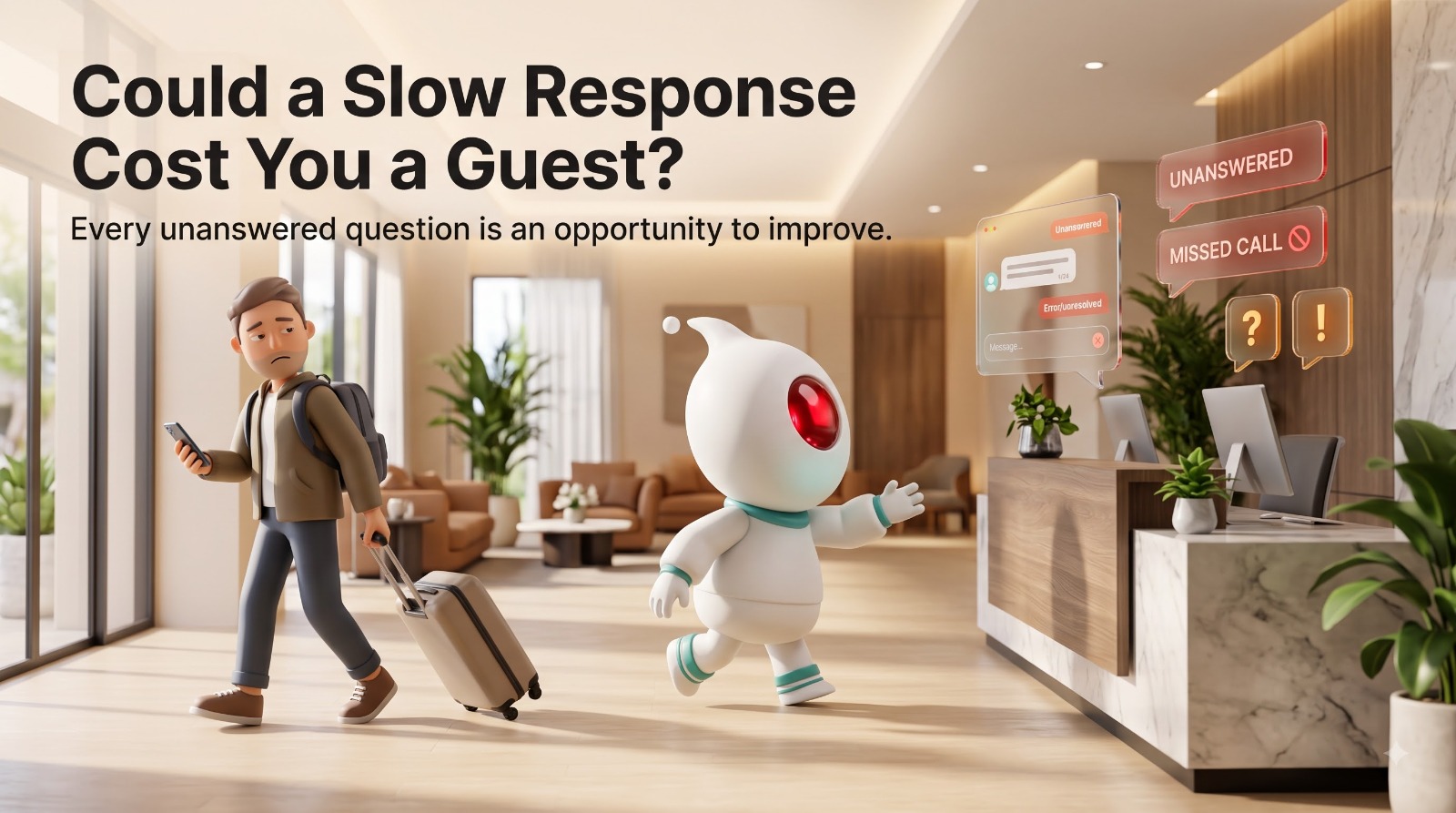
Chatbots proved that automation could reduce costs. AI agents prove that automation can drive revenue.
For business owners, the choice is clear:
- Stick with chatbots: Automate 20–30% of enquiries, lose high-intent leads to slow responses, and keep paying for labor to handle the rest.
- Switch to AI agents: Automate 60–70% of enquiries, convert 35–45% more leads, and free your team to focus on high-value work.
In a world where customer expectations are rising and competition is intensifying, the enterprises that win will be those that treat engagement not as a cost center, but as a strategic lever.
Curious What BotSpice AI Agents Could Do for Your Business?
We get that switching from a chatbot to an AI agent is a decision that requires clarity. That’s why we offer a no-obligation demo tailored to your industry and business scale.
In this session, we’ll show you:
- How your current chatbot workflows would translate to an agentic model.
- Where you’re likely losing high-intent leads due to slow or incomplete responses.
- What kind of conversion uplift and cost savings you can expect in the first 90 days..